
Easy tips for a balanced nutrition
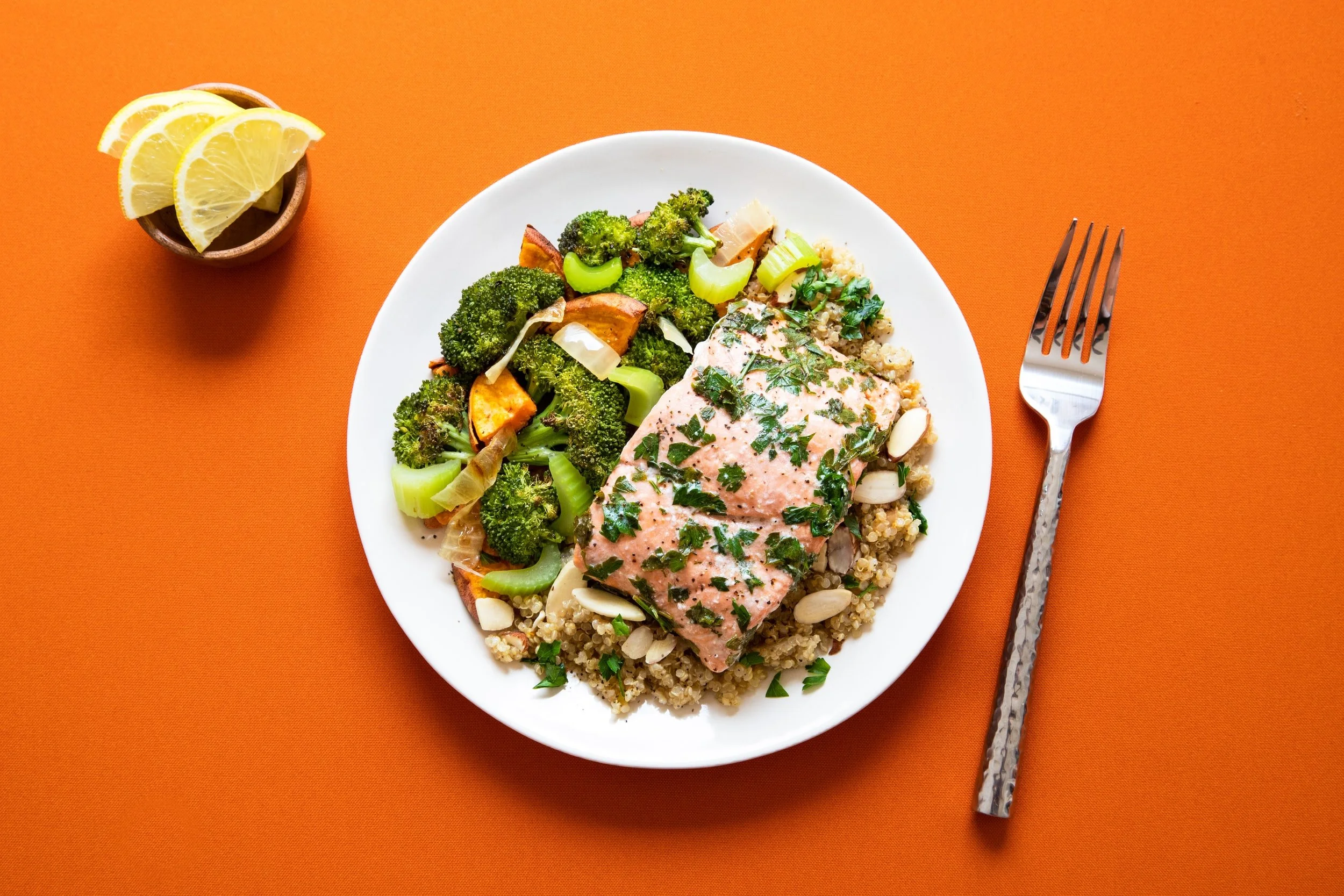
How to fill your plate:
1. Pick a protein (around 3-5 oz.)
2. Fill at least 1⁄2 of your plate with colorful vegetables (eat the rainbow!)
o Include raw vegetables at least once a day. These are rich in enzymes and fiber!
o Starchier vegetables (roots and tubers) are a helpful addition if you need
additional carbohydrates (i.e. you are very active)
o Have a serving of fruit a day if you like (if well-tolerated)
3. Add healthy fat (ex. avocado, nuts and seeds, etc.). Meals may already contain some fats: fatty meats or
cooking oil)
How much do I eat?
Here’s how much of each food to eat at each meal and snack based on standard serving sizes.
Exact portion sizes will depend on your activity and goals, so adjust accordingly. For
example, if you are very active and/or have more muscle mass, you may need to increase your
intake.
Cooking for more than one?
● Multiply serving sizes by the number of servings you need.
Food Portion Size
Meat, poultry, fish, dairy - The size/thickness of your palm
Eggs - Whatever fits into an open handful
Veggies - At least 1⁄2 of your plate
Starchy veggies (potato, pumpkin, etc.) - The size of your fist
Grains (rice, oats, wheat, etc.) - The size of your fist
Legumes (lentils, beans, peas) - The size of your fist
Fruit - An open handful
Oils & butters - The size of your thumb
Nuts & seeds - One closed handful
Meal Tips
● Eat a variety of foods, or rotate them every few days so you aren’t eating the same
foods daily.
● Aim for 3 meals per day to begin while minimizing snacking and grazing.
● Listen to your body and its cues to differentiate real hunger from boredom, cravings,
and emotional comfort. It is OK to feel hunger, the signal that it is time to eat again is
normal, but you should never feel starved.
● Adjust the amount of food you need. Each meal should fill you up until your next so
you don’t overeat or feel too hungry.
● Feel hungry shortly after eating? (within 1 1⁄2 hours of a meal). Note what you ate and
how much. You may need to increase the protein or fat content as these are more
satiating than carbohydrate foods or eat slightly larger portions.
● Be a mindful eater
o Minimize distractions and relax. (Proper digestion occurs only in a calm, relaxed
state).
o Make your plate and then sit down.
o Pay attention to your food while you eat and chew each bite adequately.
o Put your fork down between bites.
o Avoid large amounts of liquids with meals as it can reduce digestion.
o Get to know your triggers and habits. Are you really hungry or are you eating out
of anxiety, habit, sugar cravings or because everyone else is?
● Blood sugar control
o Try to avoid all grains, legumes, sweeteners, and starchy or high sugar
fruits/vegetables and monitor how it affects your blood sugar.
● Autoimmune protocol
o Avoid all grains, legumes, dairy, eggs, nuts and seeds, nightshades, and
sweeteners.
● Athletes
o As needed, add starchier vegetables/fruits and whole grains/legumes as
tolerated (particularly post-workout). Include carbs and protein post workout to
help muscle recovery (in a 1:1 or 2:1 ratio depending on intensity). Post workout
meal should be within 45 minutes of workout.
● Preconception/Pregnancy/breastfeeding
o Don’t skimp on healthy fats
o Consume as broad a range of foods as you can manage
o Include mineral-rich foods like bone broth, organ meats (from pastured/wild
animals), sea vegetables, raw nuts and seeds
o Specific cravings can be a sign of a nutrient need (unless it’s skittles..) so listen
to your body.
● Weight-loss:
o Pay specific attention to blood sugar handling (see recommendations above or
from your practitioner) as well as listening to your hunger/fullness cues. Keep in
mind that if meals are not satisfying you between meals, you need to re-examine
the carb/fat ratio, ensure adequate protein and if this doesn’t help contact your
practitioner for ideas.
o When eating meals made up of whole foods in the right ratios, counting calories
and macros is not necessary. Speak to your practitioner if you have questions.
● Specific food intolerances or preferences:
o In recipes, feel free to swap out veggies for other veggies, proteins for other
proteins, grains/legumes for starchy or low-starch veggies, and cooking oils for
other cooking oils!
Resource: NTA (Nutritional Therapy Association)